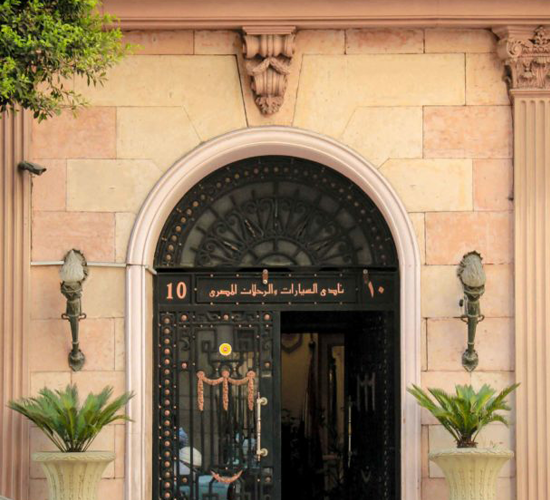
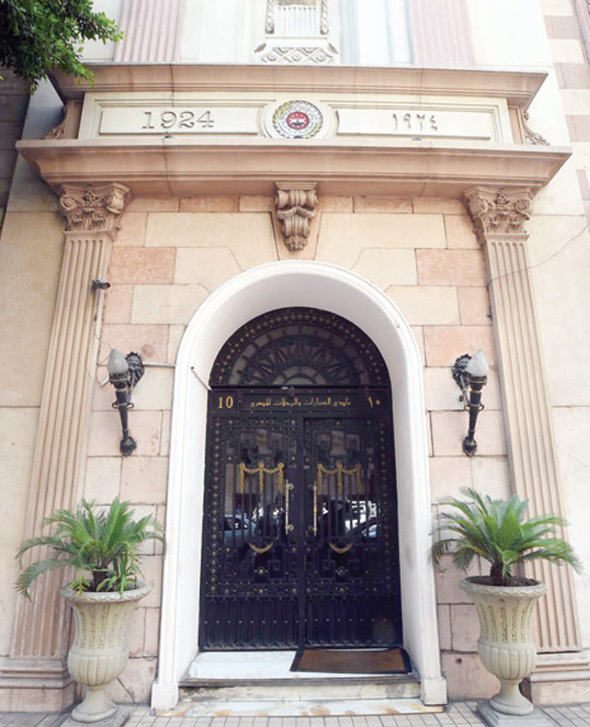
On one of the streets of downtown Cairo, where intense noise dominates—ranging from the sounds of passersby and the calls of street vendors to the horns of public buses and private cars—stands a historic three-story building. The moment one steps through its uniquely styled entrance, time seems to pause, and the visitor suddenly finds himself in the heart of the 1920s, specifically the year 1924.
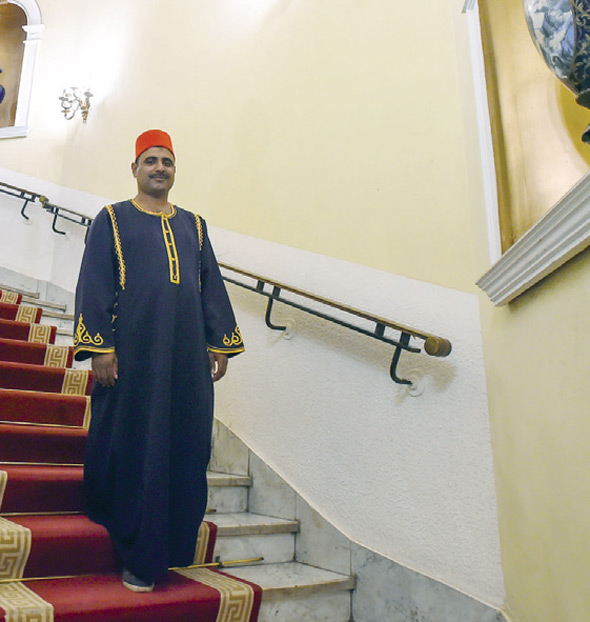
The atmosphere of the street itself shifts from loud clamor to a gentle calm, marked by the quiet movement of a limited number of automobiles and pedestrians dressed in elegant, classic attire reflecting refinement and beauty. They are welcomed by a waiter wearing a dark blue kaftan and a traditional tarboosh, greeting visitors as they enter Egypt’s first automobile club.
From Aziz Hassan to Gamal Toussoun .. The Story of an Idea!
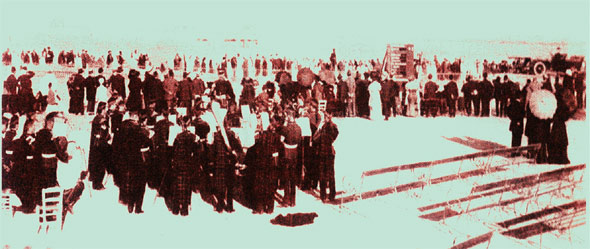
One of the Car Races Held in the Al-Ahram Area in the Past
Automobile and Touring Club of Egypt was not an idea born with its official establishment in 1924; rather, early attempts to create it began as far back as 1905. With this statement and a welcoming smile, Engineer Ali Eissa, Chairman of the Club’s Board of Directors, began his conversation with Al-Ahram, unveiling the introductory chapters of the history of this venerable club, now 98 years old.
Eissa explains that with the dawn of the twentieth century, development began to sweep through Cairo, and the spread of the “automobile” became one of the hallmarks of this progress. Prince Aziz Hassan, grandson of Khedive Ismail, was among the earliest car owners, but this privilege came at a high cost—not due to the purchase of the vehicle itself, but because of the extensive damage it caused to farmlands and the death of a considerable number of livestock.
While driving his modern car on the way to Alexandria, the agricultural road at the time was unsuitable for driving, leading him to a series of accidents along the route and obliging him to pay immediate compensation to farmers. Subsequently, members of the ruling family began acquiring automobiles, and in 1905 the idea of establishing an automobile club emerged, to be headed by Prince Aziz Hassan.
However, Egypt faced financial crises that lasted for several years with the onset of World War I. With Aziz Hassan’s travel abroad, Automobile Club of Egypt closed its doors in 1913.
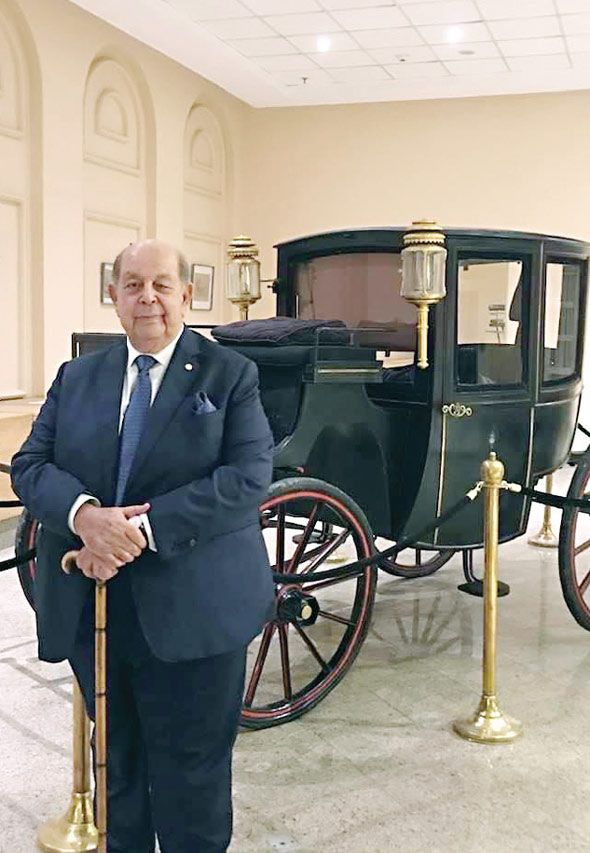
Ali Eissa with One of the Classic Cars
Eissa continues, explaining how the idea of establishing the club resurfaced, capturing the interest of the few car owners in the country, both Egyptians and foreigners. The true beginning came in February 1924, under the name Royal Automobile Club of Egypt, with its first headquarters on El-Shawarby Street in downtown Cairo.
It later moved to its current location on Kasr El-Nil Street, a property gifted by Princess Fatima Ismail, daughter of Khedive Ismail. Prince Gamal Toussoun was appointed as its president, under the patronage of King Fuad.
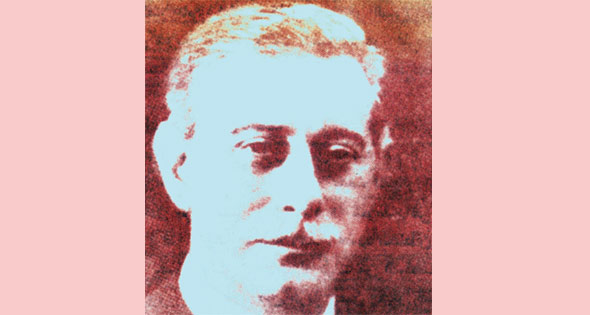
Gamal Toussoun
Eissa reveals that the club’s membership fees at the time did not exceed 600 qirsh. In a short period, the club became a social institution performing multiple and significant roles. It was not merely a recreational venue; it also left its mark on motor sports activities within Egypt and abroad, significantly boosting tourism. The club came to represent Egypt in several international organizations, such as the Fédération Internationale de l’Automobile (FIA), where it was a founding member, according to Ali Eissa.
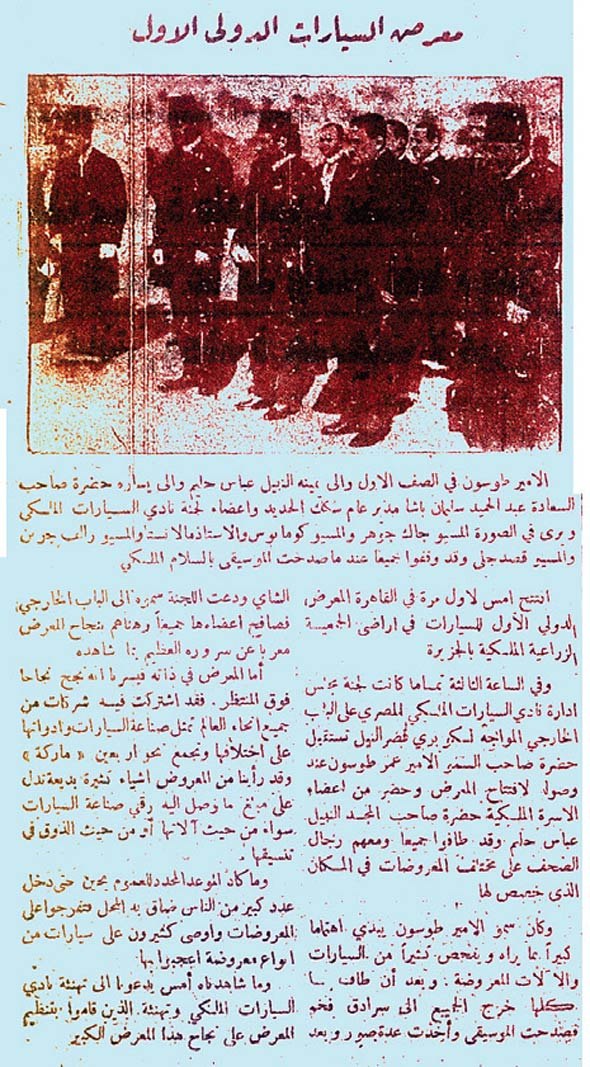
Announcement of the Motor Show in Al-Ahram
In a rare interview conducted by Egypt’s Al-Hilal magazine with Prince Gamal Toussoun in 1925, published in the series Egyptian Days, Toussoun outlined the club’s objectives, saying:
“Our goals are focused on uniting individual efforts to promote the automobile movement in Egypt, by improving the roads connecting rural areas, constructing new routes, and organizing exhibitions, events, and sports competitions for both amateurs and professionals, in which Egyptians, residents, and foreigners can participate. We aim to facilitate their access to Egypt and reduce the cost of fuels used to operate automobiles.”
Toussoun also stated in the same interview that plans were underway to establish an automobile club in Alexandria, starting in the winter of 1926, with two additional branches planned in Tanta and Mansoura. He expressed his ambition to establish a club in every governorate, with each club responsible for repairing existing roads, building new ones, and setting up gas stations within its respective region.
The Club Entrance: A Glimpse into the 1920s
In 1927, the Royal Automobile Club held Egypt’s first international motor show in the Zamalek area, on the grounds of the Royal Agricultural Society, which is now home to the Egyptian Opera House. Egyptian newspapers, led by Al-Ahram—whose owner at the time, Gabriel Tacla, was one of the founding members of the club’s board—used their pages extensively to promote the exhibition, greatly contributing to its success.
Dr. Younan Labib Rizk provided comprehensive coverage of the exhibition in Al-Ahram through his series Al-Ahram: The Treasury of Contemporary Life. The entrance ticket to the exhibition was priced at ten qirsh.
The Club: Between Past and Present
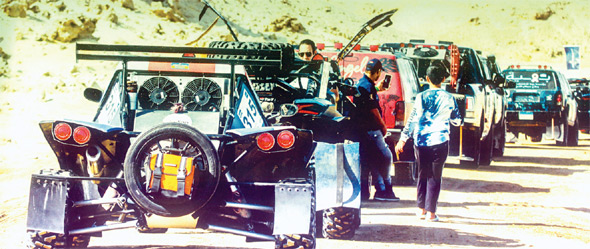
One of the Rallies Currently Organized by the Club
There is no bright future without a glorious past, as the past always harmonizes with the present to produce a solid human civilization upon which nations and peoples are built. This is exactly what Automobile and Touring Club of Egypt has achieved in its renewed form. Its administrators have successfully preserved its heritage and authenticity while adding contemporary touches to keep pace with societal changes.
So, what is the club’s current role, and what are its future projects? Wael Abdel Galil, Deputy General Manager and Director of Sports Activities, answers these questions. He begins by explaining that the Royal Automobile Club changed its name to Automobile and Touring Club following the July 23 Revolution.
Regarding the present, Abdel Galil notes that one of the club’s most distinguished services, available to both members and non-members, is facilitating the transfer of automobiles from one country to another through an international driving permit, without paying any customs fees, albeit for a limited period.
The club also assists the public in obtaining International Driving Licenses, which allow holders to drive in approximately 162 countries. Abdel Galil reveals that demand for the international license increases during certain seasons, such as the Hajj season.
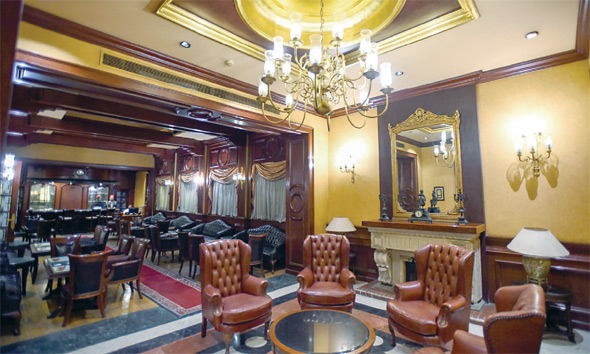
One of the Club’s Halls.. History and Heritage
Regarding the other roles played by the club, Abdel Galil explains that they include traffic awareness, improving road quality, standardizing traffic signs in Giza Governorate as a first phase, and accurately determining locations for road signage.
Wael Abdel Galil also highlights that organizing car and motorcycle races is one of the club’s key responsibilities. Although Egypt lacks several fully equipped racing tracks, this does not prevent the club from continuing to pursue this activity.
The Classic Touches Still Remain
Abdel Galil explains: “We organize several races in parking lots, carefully inspected in advance by specialists.” He adds: “There is no specific age requirement for participation; globally, it starts from 7 years old. In Egypt, we have begun forming a youth team for karting, which involves small-sized cars. In regular car races, there are about five competitors aged between 8 and 13, some of whom also participate in desert rally competitions.”
Regarding sports activities, Abdel Galil notes that the club has launched several initiatives to promote tourism, including the ‘Safe Sinai’ initiative, which took place over four editions. It included a motorcycle convoy from Cairo, passing through Dahab, Nuweiba, and Taba, and arriving in Sharm El-Sheikh. Another major tourism event organized by the club was the motorcycle challenge ‘Crossing Egypt Challenge’, involving Egyptians and foreigners, some aged between 60 and 80. Participants toured various parts of Egypt, and the next edition of this event is scheduled for October.
Wael Abdel Galil
The club’s activities do not end there. Abdel Galil highlights the Classic Car Room, which supports the hobby of collecting rare automobiles. Among the most notable classic cars are those owned by singer Abdel Halim Hafez and actors Fouad El-Mohandes and Abdel Salam El-Nabulsi.
Additionally, the club organized the Khedivial Cairo Exhibition, featuring a collection of rare photographs of Cairo’s most prominent historical landmarks alongside contemporary images of the same sites after restoration, allowing them to regain their distinguished original character. The exhibition also included photos of the world-renowned architects of that era.
Finally, Abdel Galil pointed out the strict rules governing members and visitors in the club’s various halls. Notably, casual attire is prohibited, even during the height of summer. In winter, formal clothing is mandatory, as the Automobile Club maintains its unique classical style, which the administrators strive to preserve.

Leave a Reply